

Blog
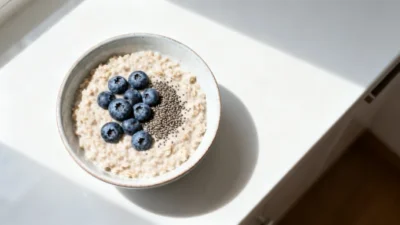
Comment choisir un fabricant OEM de petit-déjeuner sain : audit d’usine et critères de qualité
Une même recette de petit-déjeuner sain peut être délicieuse d'une usine à l'autre et médiocre d'une autre. La variété des céréales, la qualité de l'eau, les équipements de cuisson, le contrôle de la stérilisation et l'intégrité de l'emballage influent tous sur le produit fini, et la plupart de ces facteurs sont fixés en usine, et non dans votre recette.
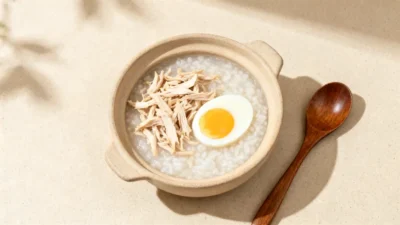
Why Your Private Label Porridge Launch Is Stalling—and How an OEM Partner Fixes It
Porridge seems like the simplest product a brand can launch: grains, water, a little time, and you have a warm, familiar breakfast. But the brands that try to take private label porridge from a kitchen bench to a supermarket shelf hit the same wall in the same order: unit cost climbs, texture drifts

Private Label Porridge Cost Analysis: Pricing, MOQ, and ROI for Your Brand
In private label porridge, the cheapest unit price is rarely the cheapest product. Total cost is decided by process choice, MOQ, packaging, freight, and failure rate — and those variables can move your real cost by thirty percent or more in either direction. Brands that quote three factories on unit

How to Launch a Private Label Porridge Brand: The Complete OEM Process Guide
The shelf-stable porridge category has moved out of the ethnic-food aisle and into mainstream convenience breakfast shelves. For a private label brand that is an opportunity, but it is also a supply chain that is harder to manage than it first appears. Porridge is a delicate starch matrix: get the c

Congee Manufacturing Compared: Instant, Retort, Frozen, or Fresh — A Congee Supplier’s View
Before you choose a congee supplier, choose a process. The manufacturing route dictates your shelf life, your unit cost, your packaging, and even which retail channels you can enter. The four dominant processes each trade off convenience, texture, and price differently, and no single process wins on

How to Choose a Congee Supplier: Factory Audit, Certifications, and Quality Criteria
The same congee recipe can taste brilliant coming out of one factory and mediocre out of another. Rice variety, water quality, cooking equipment, sterilisation control, and packaging integrity all shift the finished product, and most of these are fixed at the factory, not in your recipe book. That i
How to Partner with a Congee Supplier: A Step-by-Step OEM Guide
The shelf-stable congee category has moved out of the ethnic-food aisle and into mainstream convenience breakfast shelves. For a brand owner that is an opportunity, but it is also a supply chain that is harder to manage than it first appears. Congee is a delicate starch matrix: get the cooking curve

Why Your Grain Bowl Launch Is Failing—and How Grain Bowl OEM Manufacturing Fixes It
Grain bowls look simple: grains, vegetables, a sauce, and a protein in a bowl. But every brand that has tried to scale one from a kitchen bench to a supermarket shelf has met the same wall. The symptoms are remarkably consistent, and they usually appear in the same order: unit cost climbs, texture d

How to Launch a Private Label Congee Line: A Step-by-Step OEM Guide
When you partner with ZeaGrove, you gain a dedicated OEM/ODM manufacturer for congee pouch products. We produce ready-to-eat rice congee, multi-grain porridge, and Asian-style nourishing soups in flexible pouches that are shelf-stable or retort-processed. Our facility is designed to handle your enti

Ready-to-Eat Congee Pouches: How an OEM Manufacturer Ensures Shelf-Stable Quality
The global ready-to-eat (RTE) meal market is expanding at a CAGR of 6.2% (Grand View Research, 2023), driven by urban lifestyles and demand for convenient nutrition. Congee, a rice porridge staple in Asian diets, has moved from home kitchens to retail shelves as a shelf-stable pouch product. For bra
 English
 Chinese
 French
 German
 Italian
 Russian
 Spanish
 Portuguese
 Dutch
 Greek
 Japanese
 Korean
 Arabic
 Hindi
 Turkish
 Indonesian
 Vietnamese
 Thai
 Bengali
 Persian
 Polish