

Bài viết của Tia
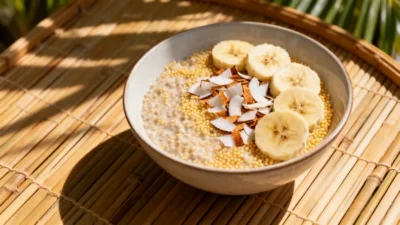
Hướng dẫn thành phần OEM cho bữa sáng lành mạnh: Những gì tạo nên một sản phẩm bữa sáng cao cấp
Một bữa sáng lành mạnh trông có vẻ đơn giản, nhưng các thành phần được sử dụng trong dây chuyền sản xuất OEM quyết định mọi thứ ở khâu sau: kết cấu, thời hạn sử dụng, bảng dinh dưỡng, nguy cơ gây dị ứng và thị trường mà bạn được phép tham gia hợp pháp. Hai sản phẩm có thể trông giống hệt nhau trong bát nhưng lại hoàn toàn khác nhau.
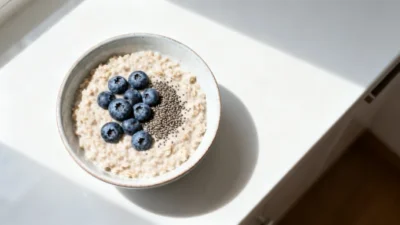
Cách chọn nhà sản xuất OEM cho bữa sáng lành mạnh: Kiểm tra nhà máy và tiêu chí chất lượng
Cùng một công thức bữa sáng lành mạnh có thể ngon tuyệt khi được sản xuất ở nhà máy này nhưng lại bình thường khi được sản xuất ở nhà máy khác. Giống ngũ cốc, chất lượng nước, thiết bị nấu nướng, kiểm soát khử trùng và độ bền của bao bì đều ảnh hưởng đến sản phẩm cuối cùng, và hầu hết những yếu tố này đều được cố định ở nhà máy, chứ không phải trong công thức của bạn.
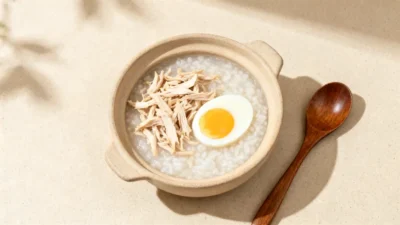
Why Your Private Label Porridge Launch Is Stalling—and How an OEM Partner Fixes It
Porridge seems like the simplest product a brand can launch: grains, water, a little time, and you have a warm, familiar breakfast. But the brands that try to take private label porridge from a kitchen bench to a supermarket shelf hit the same wall in the same order: unit cost climbs, texture drifts

Private Label Porridge Cost Analysis: Pricing, MOQ, and ROI for Your Brand
In private label porridge, the cheapest unit price is rarely the cheapest product. Total cost is decided by process choice, MOQ, packaging, freight, and failure rate — and those variables can move your real cost by thirty percent or more in either direction. Brands that quote three factories on unit

How to Launch a Private Label Porridge Brand: The Complete OEM Process Guide
The shelf-stable porridge category has moved out of the ethnic-food aisle and into mainstream convenience breakfast shelves. For a private label brand that is an opportunity, but it is also a supply chain that is harder to manage than it first appears. Porridge is a delicate starch matrix: get the c

How to Choose a Congee Supplier: Factory Audit, Certifications, and Quality Criteria
The same congee recipe can taste brilliant coming out of one factory and mediocre out of another. Rice variety, water quality, cooking equipment, sterilisation control, and packaging integrity all shift the finished product, and most of these are fixed at the factory, not in your recipe book. That i
How to Partner with a Congee Supplier: A Step-by-Step OEM Guide
The shelf-stable congee category has moved out of the ethnic-food aisle and into mainstream convenience breakfast shelves. For a brand owner that is an opportunity, but it is also a supply chain that is harder to manage than it first appears. Congee is a delicate starch matrix: get the cooking curve

Congee Manufacturing Compared: Instant, Retort, Frozen, or Fresh — A Congee Supplier’s View
Before you choose a congee supplier, choose a process. The manufacturing route dictates your shelf life, your unit cost, your packaging, and even which retail channels you can enter. The four dominant processes each trade off convenience, texture, and price differently, and no single process wins on

Why Your Grain Bowl Launch Is Failing—and How Grain Bowl OEM Manufacturing Fixes It
Grain bowls look simple: grains, vegetables, a sauce, and a protein in a bowl. But every brand that has tried to scale one from a kitchen bench to a supermarket shelf has met the same wall. The symptoms are remarkably consistent, and they usually appear in the same order: unit cost climbs, texture d

Hướng dẫn thành phần từ nhà sản xuất cháo đóng gói số lượng lớn: Thực chất trong gói có gì
Cháo trông có vẻ là một món ăn đơn giản, nhưng các nguyên liệu được sử dụng trong dây chuyền sản xuất hàng loạt sẽ quyết định mọi thứ ở khâu sau: kết cấu, thời hạn sử dụng, bảng dinh dưỡng, nguy cơ gây dị ứng và thị trường mà bạn được phép tham gia hợp pháp. Hai bát cháo có thể trông giống hệt nhau nhưng lại là hai sản phẩm hoàn toàn khác nhau.
 English
 Chinese
 French
 German
 Italian
 Russian
 Spanish
 Portuguese
 Dutch
 Greek
 Japanese
 Korean
 Arabic
 Hindi
 Turkish
 Indonesian
 Vietnamese
 Thai
 Bengali
 Persian
 Polish